

Your content writing guidelines can now grade your content. An AI agent scores every article from 1 to 10 against site governance and lists the exact fixes.
Frequently asked questions
Accessible websites are easier for every user to navigate and understand, not only people with disabilities. Clear structure, sufficient contrast and predictable navigation reduce cognitive load and support times for all visitors. For government agencies specifically, WCAG AA compliance is also a regulatory requirement under Australian accessibility standards (including AS EN 301 549), so accessibility is both a user-experience investment and a legal obligation.
All three, and treating it as only one is the most common reason accessibility work fails. Designers need to design within accessibility guidelines from the start; developers need technically sound implementation under the hood; content editors need to avoid adding presentational formatting that undermines what designers and developers built. The organisations that get the best accessibility outcomes make it a shared responsibility from project inception rather than a remediation pass at the end.
WCAG 2.1/2.2 AA is the baseline most Australian government digital service standards require, and AS EN 301 549 is the Australian Standard that formally defines accessibility requirements for government digital services, aligned to WCAG. A credible Drupal partner should be able to demonstrate how their design system choice (e.g. the Australian Government Design System or Bootstrap 5) and testing regime (automated tools like SiteImprove, Lighthouse and WAVE, plus manual keyboard testing) map to this standard, not just assert "we're accessible."
Drupal's Accessibility Initiative and the ecosystem of accessibility-first design systems built for it (like the Australian Government Design System) give it a stronger foundation for meeting AA compliance at scale than most drag-and-drop site builders, which are optimised for visual flexibility over structural compliance and often make it easy for an untrained editor to break accessibility unintentionally.
Insights
Article
An exploration of how to set up Drupal AI automators to improve the editor experience when maintaining content.
Article
A review of the different ways dynamic PDFs can be generated in PHP and JavaScript. Each has its own set of pros and cons.
Article
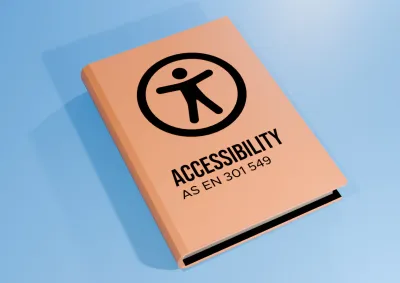
AS EN 301 549 defines accessibility requirements for Australian Government digital services. This article explains the standard, its WCAG alignment, and how Morpht meets it in Drupal projects.

Article
How breaking your hand exposes hidden barriers in everyday workflows and deepened my understanding of accessibility, productivity, and inclusive design.

Article
Design trends are a topic of conversation every year. But are they fit for purpose? It's far better to cover important trends that can be applied to any project than an overall stylistic approach.

Article
Content developed for Australian government websites needs to be inclusive and accessible. Inclusivity includes “literacy” as one of the areas of consideration.

Article
This blog post provides a step-by-step guide to integrating a dynamic color palette feature into a theme in Drupal. It explores how CSS Variables enable seamless customization, enhance accessibility, and provide a no-code solution for site builders.

Article
The Convivial for GovCMS (Bootstrap) site accelerator has received a large update incorporating many new DXP features and other improvements and fixes.

Article
This article explores what the policy means for agencies and the key changes it brings to the development of government digital platforms.

Article
A review of the pros and cons of moving towards or away from publishing PDFs on government sites in Australia.

Case study
AER embarked on a transformation journey, where Morpht rolled outa rigorous approach that encompassed extensive discovery phases, detailed content modelling, and the migration of numerous data sources.
Article
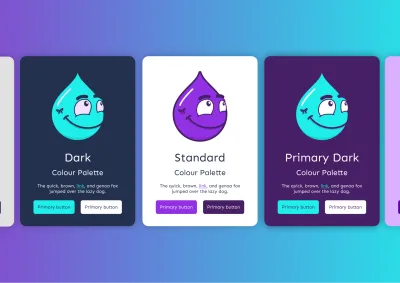
Crafting the perfect colour palettes for your website not only enhances visual appeal but also invigorates your brand identity. Making them accessible is part of our commitment to ensuring that everyone can engage with your content.
Case study
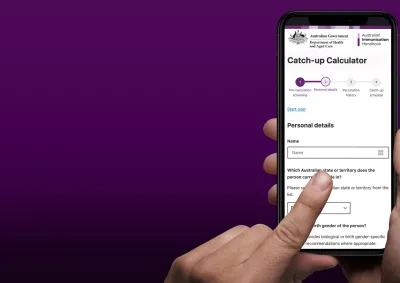
The National Immunisation Catch-up Calculator generates vaccination schedules based on a number of factors, including age, location, medical at-risk conditions and previous vaccination history.

Case study
An optimized information architecture, a refreshed contemporary design, and improved resource management were all delivered in record time to prepare the site for a national awareness raising and behavioural campaign, and to support the wider work of the National Office for Child Safety (NOCS).

Case study
The TGA are now celebrating a brand new site on GovCMS. With a contemporary look and feel underpinned by consistent structures and familiar patterns, this site is now the foundation for the next stage of the digital transformation the TGA is undergoing.

Case study
Morpht re-architected 1,200 pages and more than 6,000 publications, factsheet and forms into 9 site sections and improved their discoverability with faceted searches.
Related content

Service
Accessibility is a shared responsibility between owners, designers, developers and editors. Our accessibility training brings your team up to speed.
Service
A site assessment takes the pulse and temperature of your site, forming a starting point for strategy and improvement.


Service
Drupal delivers great on page SEO and we know how to get the most from it for rock solid SEO fundamentals.