

An examination of the humble "list" and how content can be modelled in Drupal to be flexible, simple and editor friendly.
Supported modules
Morpht contributed open source code to the Drupal community, enriching the ecosystem. We take pride in being “makers” of Drupal and other projects. Here are some of the projects we have released to the public.
An innovative module which allows various presentational modifications to be applied to content. Common modifications include the addition of background images and video, as well as the selective application of libraries to enhance the way content works.
Personified brings personalized content from the backend to the frontend based on derived user preferences. Personified works out what needs to be displayed, fetches it, transforms it to HTML and displays it to the user. You have seen Personified at work on the homepage of this site. It is a powerful module which works nicely with JSON Template.
Sajari is an AI powered search engine. Morpht works closely with Sajari to bring to you modules which allows for the indexing and retrieval of content in the Sajari backend. Sajari forms part of our personalization suite of modules.
Recombee is a recommendation service which is able to provide user based recommendations based on the past behaviour of the user in combination with the wisdom of the crowd. Recombee combines a number of strategies to serve content which is best suited for the current user content.
A utility module which makes it easy to assign a display mode to a list of content items. This module is really helpful for building out cards and teaser lists such as those you see on this page.
A utility module which gives editors the ability to select styling options which can be applied to components. This is handy for applying different colour palettes in a design system or customising the look for a component.
A utility module which provides flexibility in how we render results which come back from external services. This module gives the editor the ability to select how data will be transformed and displayed. It is used with Sajari and Recombee modules, for example.
Frequently asked questions
Drupal is an open-source content management system (CMS) with more than 25 years of continuous development. It is best suited for organisations that need enterprise-grade security, complex content architecture, multilingual support, fine-grained access controls, and the ability to integrate with a wide ecosystem of third-party services. Government agencies, universities, healthcare systems, and large enterprises consistently choose Drupal for high-stakes digital properties where compliance, scalability, and structured content are non-negotiable.
Drupal wins decisively on security, compliance, and complex content architecture. Its permission system, security update cadence, and structured content model make it the default choice for regulated industries including government, finance, and healthcare. WordPress is faster and easier to deploy for simpler sites and marketing-led organisations, but its plugin ecosystem introduces significant security governance overhead at scale. For Australian government agencies in particular, Drupal's alignment with GovCMS and government security frameworks provides a compliance pathway that WordPress cannot match out of the box.
Drupal provides comparable enterprise capability to Sitecore and Adobe Experience Manager (AEM). Including personalisation, multilingual content, structured workflows, and API-first delivery - at a fraction of the licensing cost. AEM enterprise deployments typically run from low-to-mid six figures annually in licensing alone before implementation. Sitecore carries similar commercial overhead. Drupal is fully open source with no per-seat or per-usage licensing, making it the most cost-effective path to an enterprise-grade digital experience platform for organisations that don't want vendor lock-in.
Yes. Drupal's market share by volume appears smaller than WordPress because it deliberately targets the enterprise and government tier rather than the mass market. The January 2026 release of Drupal CMS 2.0 introduced Drupal Canvas (a visual drag-and-drop page builder), AI-powered page generation, and site templates, substantially improving the editor and marketer experience. The Drupal AI Initiative, backed by 30+ organisations and more than 50 contributors, has released a coordinated AI module with over 60 features, including an AI Observability module and Prompt Library. Drupal is actively investing in its future.
Drupal CMS is a product layer built on top of Drupal core, designed to make Drupal's power accessible to marketers, content strategists, and non-developers. It ships with smart defaults, site templates, and AI-assisted tools including Drupal Canvas, a visual page builder. Drupal CMS 2.0, released in January 2026, is described by the Drupal Association as the biggest evolution in the platform's 25-year history. It is designed to reduce the dependency on developers for everyday content and design tasks while preserving Drupal's enterprise foundations.
The Drupal AI Initiative launched formally in June 2025 and has grown to 30 sponsoring organisations, including Morpht, which joined as a Gold AI Maker. The 2026 roadmap covers eight capability areas: AI-assisted page generation, context management (brand voice and governance rules for AI), background agents that automate content tasks, design system integration, content creation and discovery, advanced governance with audit trails, intelligent website improvement driven by performance data, and AI search. Drupal's structured content architecture, the same quality that makes it trusted for government, turns out to be exactly the foundation AI needs to be trustworthy and auditable.
Yes. Drupal is the platform underpinning GovCMS, the Australian Government's whole-of-government web hosting and CMS platform. GovCMS SaaS customers benefit from IRAP-assessed security, managed updates, and monitoring. Drupal's security team operates a dedicated advisory system and releases patches on a structured schedule. Morpht's own hardening checklist ensures delivered sites meet federal and state government security requirements, and Morpht has experience delivering IRAP-aligned projects for agencies including the Therapeutic Goods Administration and the Department of Finance.
Drupal has built-in multilingual support that is considered industry-leading among open-source CMS platforms. It supports content translation, interface translation, language detection, and right-to-left language layouts, all natively, without third-party plugins. For Australian government agencies with obligations under the Language Services Policy or serving multicultural communities, Drupal's multilingual architecture is a significant advantage over platforms that bolt multilingual capability on via third-party modules.
Drupal is architected around structured content, allowing organisations to define content types, fields, taxonomies, and relationships that reflect their actual information architecture rather than forcing content into a one-size-fits-all model. This structured approach makes Drupal's content highly portable; it can be served via REST or GraphQL APIs to websites, apps, digital signage, and other channels. It also makes AI integration more trustworthy because AI systems can work with well-defined, governed content rather than unstructured blobs.
Yes. Drupal has first-class API-first capabilities including JSON:API and GraphQL endpoints, making it a strong choice as the content backend for decoupled architectures where the front end is built in React, Next.js, or another JavaScript framework. This "progressively decoupled" approach allows organisations to retain Drupal's content governance and editorial workflows while delivering fast, modern front-end experiences. Drupal's decoupled delivery capability is considered superior to WordPress and comparable to purpose-built headless platforms like Contentful.
Insights


Article
Morpht developed an integration between Drupal, a CRM and the NSW Customer Payment Platform (CPP) for a NSW government agency.

Article
Calendar Links Token is a simple module for displaying calendar invites via Tokens in Drupal.

Article
Both the Group and Scheduled Transitions are powerful modules in the Drupal ecosystem. Group Scheduled Transitions brings them together.

Case study
The NSW Food Authority engaged Morpht to redevelop and refresh the design of its website and migrate the content from TRIM WCMS to GovCMS.

Case study
A Drupal 8 build involving migration of content from a legacy CMS system and developing a technically challenging fail-safe data update functionality from a third party SOAP data feed.

Case study
In this case study, find out how Morpht integrated CRM, Google Maps, Customer Portal and Drupal to deliver a seamless user experience for the customer and editor alike.

Article
Learn how to create content via email and have it imported into Drupal using Mail Comment.
Article
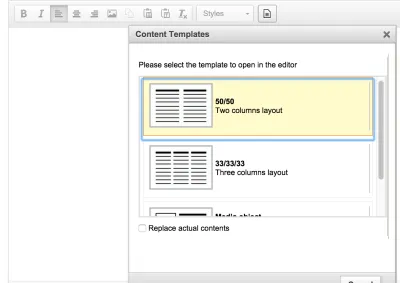
Creating responsive websites is easy these days with frameworks like Zurb’s Foundation and Bootstrap. The WYSIWYG API template plugin module allows us to predefine templates in WYSIWYG, helping editors to layout content for a mobile friendly website.
Related content

Service
Skilled frontend developers and Drupal themers bring life to your website and designs.
Service
Data is like wine. Enhance your data and improve your Drupal website with our integration services.

Topic
The solid foundations provided by Drupal can be taken to the next level with personalisation and customization.

Topic
Drupal is a leading open source CMS. Morpht specializes in Drupal sitebuilding, development, theming and integration and has delivered many transformation projects for government and enterprise clients.