
A reflection on our DrupalSouth Wellington 2026 presentation.
The Drupal ecosystem is currently experiencing a massive wave of innovation. Driven by a shifting web landscape and competition from other CMS platforms, Drupal is evolving rapidly. Key initiatives like Drupal CMS, the Canvas page builder, and the Drupal AI initiative are changing the way we think about web development.
At the heart of this transformation is the newly launched Drupal Marketplace - a centralised hub for downloading and commercialising pre-packaged site templates. Recently, the team at Morpht dove headfirst into this new ecosystem to build Convivial for Gov, a site template tailored for the government sector. At the recently held DrupalSouth conference in Wellington, I presented on the work we have been doing in this area.
The Rise of the Drupal Marketplace
Just over a year ago, Drupal's founder, Dries Buytaert, floated the concept of a marketplace for site templates. By March 2026, at DrupalCon Chicago, that concept became a reality. The vision? To offer potentially thousands of niche-specific templates that rapidly accelerate site building.
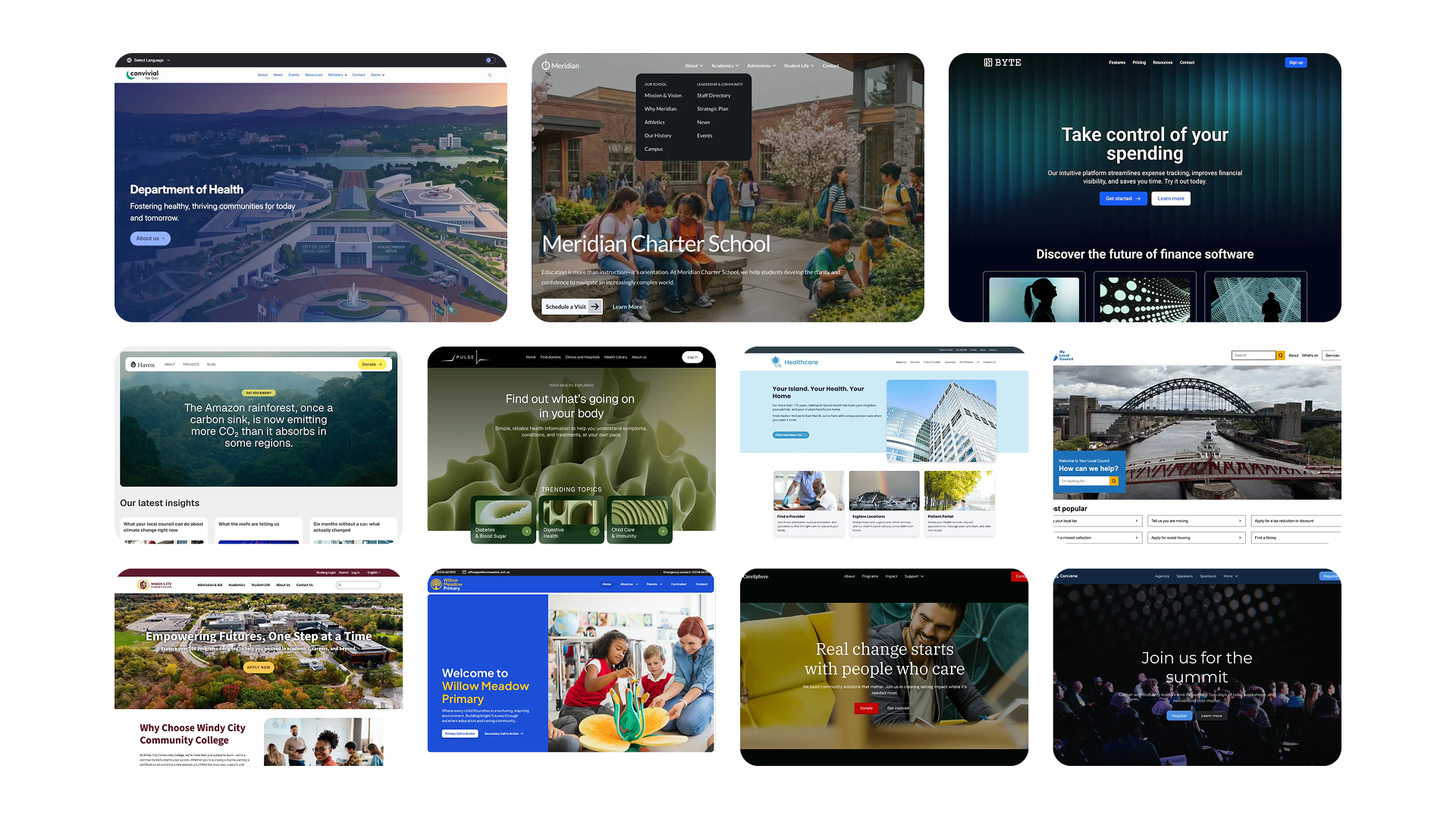
As the marketplace matures, several distinct patterns and best practices are already emerging:
- Verticals: Healthcare, Education, Government, Non-profit and Events. This is what can be considered typical for the Drupal ecosystem more broadly.
- CSS Frameworks: The rise of Tailwind is evident. Morpht has decided to build with Daisy UI, which is based on Tailwind.
- Page Building: The new approaches are being adopted: Canvas, Blocks. Some templates have implemented Paragraphs, which is still probably a good idea to fill the gaps currently left by Canvas.
- Capabilities: Theme engine functionality and flexibility are more important than solving vertical problems in these initial stages.
- Structure: Monolithic vs Composed. Design components for Canvas require a finer-grained approach than with Paragraphs.
- Development Effort: 90% of development goes into universal Single Directory Components (SDCs); vertical-specific features are built on top.
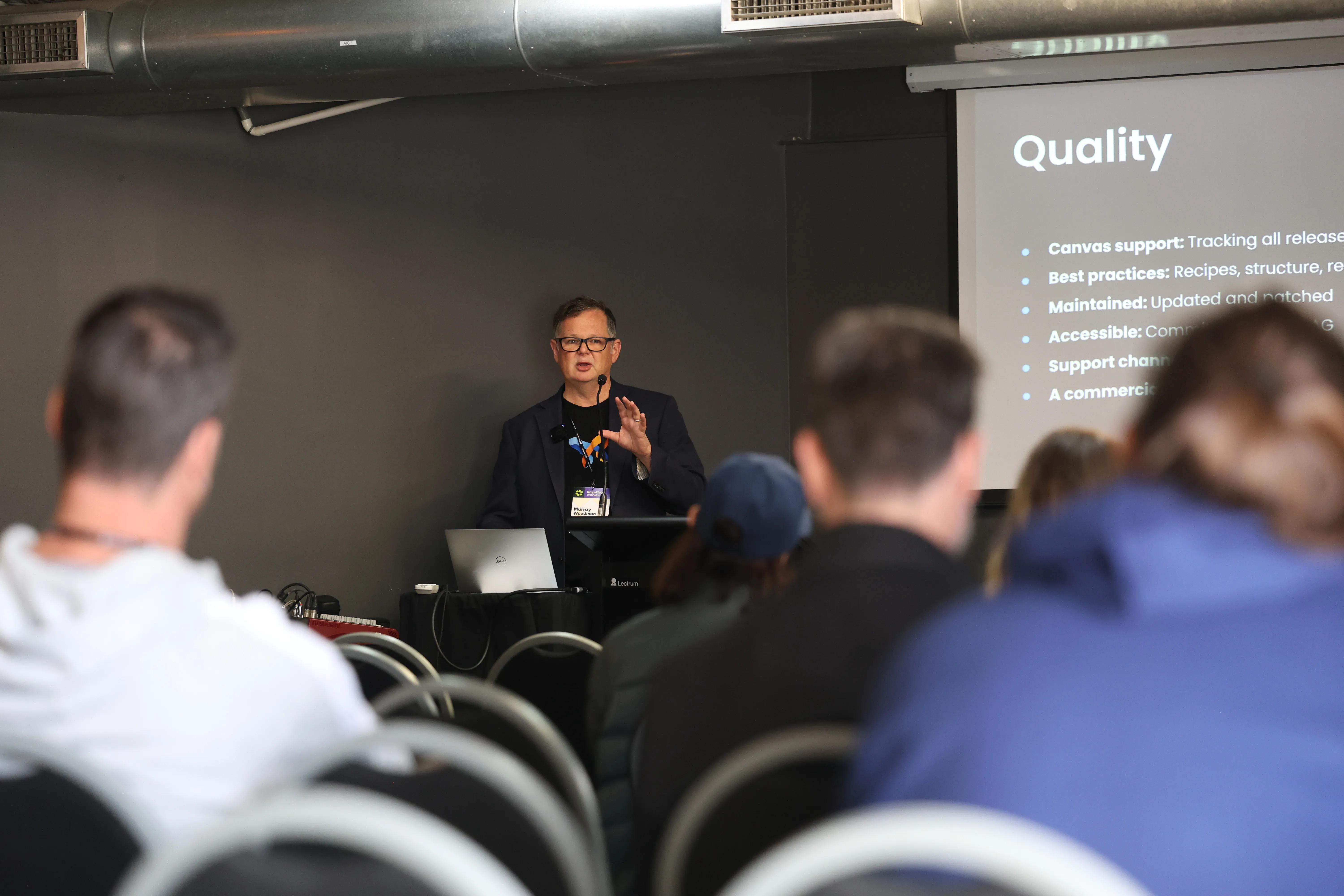
Quality and Community Standards
Joining the marketplace isn't just about uploading code. Vendors must agree to a stringent set of quality conditions. If you are a decision-maker looking to adopt these templates, you can expect:
- Canvas support: Tracking all releases
- Best practices: Recipes, structure, reusability
- Maintained: Updated and patched
- Accessible: Commitment to WCAG
- Support channels: Community and customers
- A commercial ecosystem: Products and services
This creates a symbiotic relationship: the Drupal Association showcases cutting-edge possibilities and earns a revenue cut, vendors gain exposure and service opportunities, and end-users get rapid, high-quality deployments.
Convivial for Gov
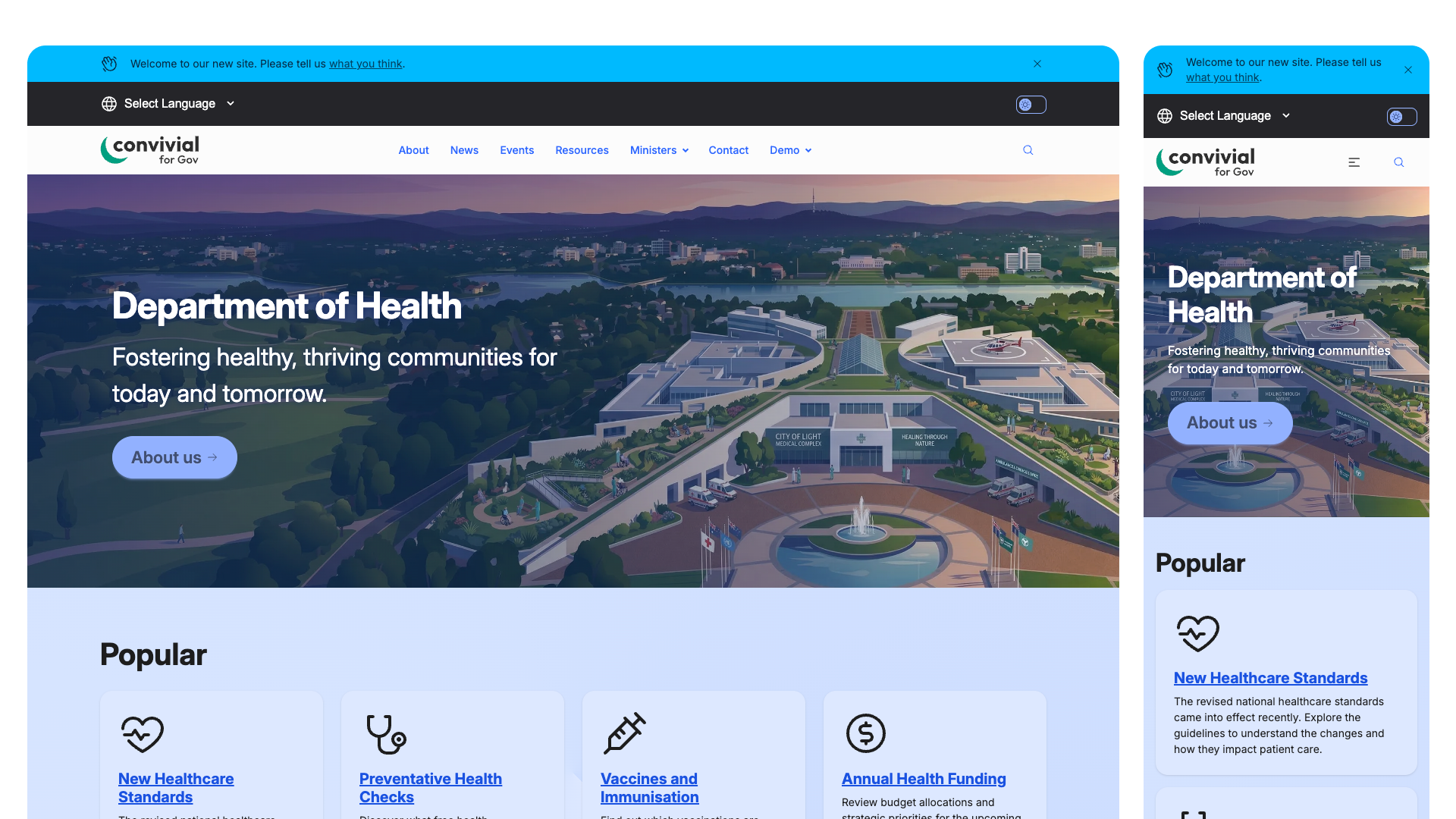
Convivial for Gov is a Drupal “template” for building quality Drupal websites in the government sector. The template is generic enough to be well-suited for a wide range of sites, including publishing, marketing and agency sites. Visit the demo https://gov.convivial.io/ to see it in action.
The Agency Perspective: Risks vs. Rewards
Deciding to build a marketplace template is a significant commitment. For an agency, it means balancing the daily demands of paying the bills with a "bet on the future."
The Risks:
- A substantial investment of time, energy, and resources.
- The pain of refactoring tried-and-tested systems (like Paragraphs and Bootstrap) to accommodate new, cutting-edge technologies.
- Navigating the inherent uncertainty of adopting untested, very new tech.
The Rewards:
- Skill Scaling: It forces development teams to jump into the deep end and master new tech like SDCs, Canvas, and AI.
- Efficiency: Transitioning toward a no-code, value-driven approach where teams spend less time on "plumbing" and more time on user experience.
- Community contribution: Moving from being a "taker" to a "maker," sharing ideas and collaborating with the broader Drupal CMS team.
Under the Hood: Key Design Decisions
For the site builders and developers, transitioning to the marketplace requires a fundamental shift in architecture. Here are a few key design choices made while building Convivial for Gov:
Adopting DaisyUI over Bootstrap
While Bootstrap has been a long-time staple, the momentum has shifted. DaisyUI, built on top of Tailwind CSS, proved to be a game-changer. Its highly structured nature - complete with props, enumerations, and slots - maps perfectly into the way Drupal's Single Directory Components (SDCs) work. Instead of reinventing the wheel, developers can map high-level components directly into their Drupal theme. Choosing DaisyUI as a foundation made a lot of sense once we saw the structured approach it was taking.
Rethinking Component Architecture
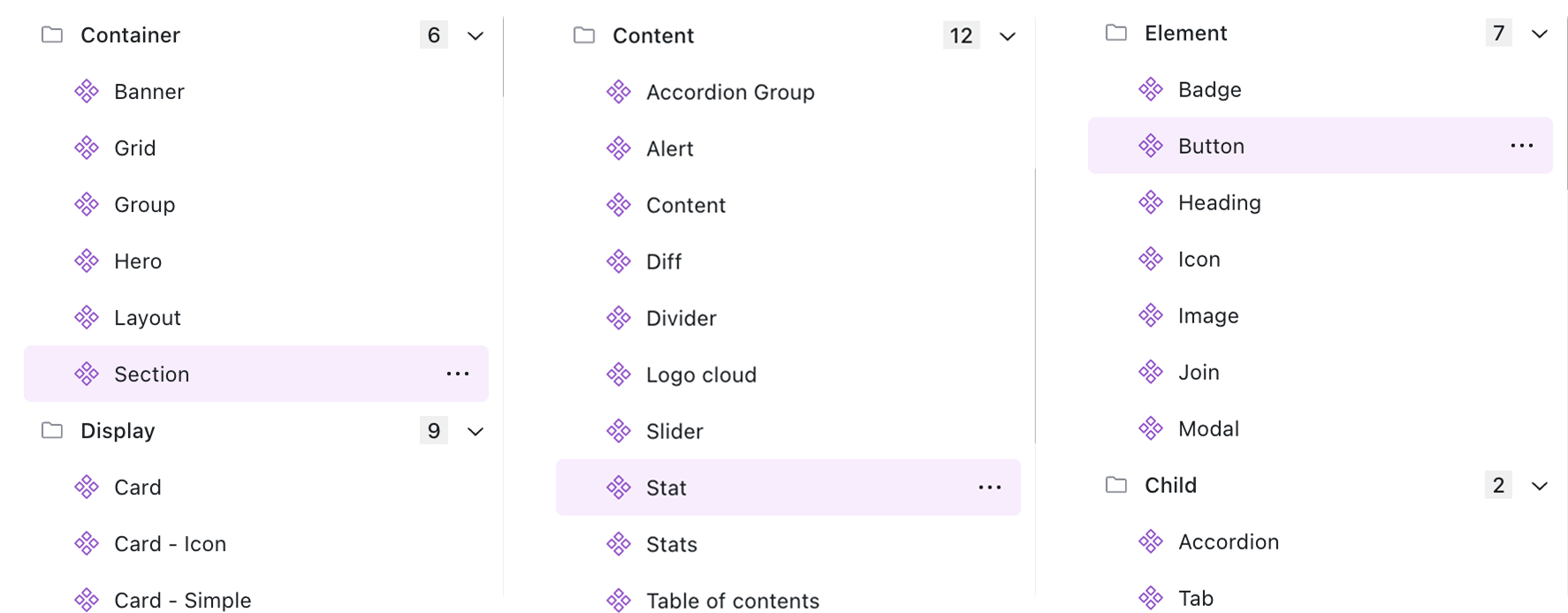
In a traditional "Paragraphs" setup, an editor interacts with a somewhat monolithic structure (e.g., a single block containing a heading, intro, and layout). Canvas requires a more decomposed, flexible approach. Components are now conceptualized strictly as containers, children, backgrounds, and behaviors. While Canvas offers unparalleled design flexibility, it does require a slight mental model shift for content editors. Building a page now requires a stronger conceptual understanding of the pieces that are required for a successful outcome.
Baking in Colour with CSS Variables
When shipping a template, the theme must be incredibly robust. Convivial for Gov utilises a flexible backend architecture based on "skins" and "schemes" to support dynamic light modes, dark modes, and custom colour palettes. By passing configuration data into CSS variables, the colour palettes automatically scope to every component without writing custom CSS for every variation. Every component has to be colour palette aware, something our no-code approach has already considered.
Overcoming the SDC Image Challenge
One of the most complex technical hurdles was making SDC's platform-agnostic. The components needed to work flawlessly in Canvas, as well as with content entities such as Paragraphs and Blocks. This was important to us because Canvas is not available on the GovCMS SaaS platform, where we do a lot of our work.
Canvas handles images uniquely, requiring specific reference data to the media browser, whereas standard Drupal treats an image as a simple object. The solution? Building a single "heavy-lifting" image component that uses data introspection. It uses a conditional switch to detect if the data is coming from Canvas; if so, it delegates to a specialised Canvas-image template, ensuring seamless compatibility across different page-building methods. This solution is perhaps more complex than what we would desire; however, it does allow for portability of our SDCs across environments.
Looking Ahead
The Drupal Marketplace is a massive leap forward, giving the community a powerful testing ground to share know-how and stand on the shoulders of giants. However, a few questions remain:
- Will 1-Click hosting take off? If hosting platforms can integrate these templates for true no-code, one-click spin-ups, the adoption rate will skyrocket.
- Is it commercially viable? Currently, many templates serve as free "business cards" to showcase vendor capabilities. Time will tell how the premium commercial ecosystem evolves.
- How will AI and canvas evolve? Both are iterating rapidly. As new features hit their roadmaps, template builders will need to continuously adapt.
Ultimately, the digital landscape is shifting. Agency owners, developers, and even established SaaS platforms must rise to the challenge, embrace the changing times, and focus on delivering rapid, efficient value to users. We are proud of what Convivial for Gov represents, and are proud to have contributed it to the Drupal Marketplace at launch.